How to Use Customer Feedback to Win More Local Customers
Turn everyday customer feedback into a powerful tool
Customer feedback is one of the most underused growth tools available to UK service businesses.
While many business owners see reviews as something that just happens in the background, the reality is that a steady stream of genuine, detailed customer feedback directly influences whether a potential customer chooses you or a competitor down the road.
According to a 2026 BrightLocal survey, 87% of UK consumers read online reviews before making a decision about a local service business.
That means before someone picks up the phone to book a plumber, a removal company, or a dental clinic, they are already reading what your past customers have said.
Customer feedback for local businesses in the UK is not just a reputation metric. It is a lead-generation tool, a trust signal, and a competitive advantage rolled into one.
This guide walks through exactly how UK service businesses can collect genuine customer feedback, turn it into a local marketing asset, and use it to win more local customers consistently over time.
Why Customer Feedback Is a Growth Tool, Not Just a Reputation Metric
Most UK service businesses only think about feedback when something goes wrong.
A bad review appears, and suddenly the focus shift to damage control. But that reactive mindset means you are leaving real growth on the table.
When approached strategically, customer feedback becomes a proactive tool that works in your favour every single day.
It tells Google that your business is active and trusted.
It tells prospective customers that real people have used your service and had a good experience.
And it tells the algorithms behind AI search tools that your business is credible enough to surface in results.
Search engines pay attention to the consistency, volume, and quality of reviews when ranking local businesses.
A service business that collects new, detailed reviews regularly signals relevance and trustworthiness.
One that stopped collecting feedback two years ago sends the opposite signal, regardless of how good the work actually is.
The shift in thinking here is simple but powerful. Stop treating feedback as a by-product of your service and start treating it as something you actively build.
It compounds over time, and businesses that understand this early create a reputation advantage that is genuinely difficult for competitors to close.
What Local Customers Actually Look for Before Choosing a Service Business
When someone searches for a tradesperson, removal firm, or local clinic, they are not just looking for availability and price.
They are looking for proof that you can be trusted.
Local buyer psychology is driven heavily by risk avoidance.
Choosing the wrong service business can mean a delayed house move, poor workmanship, or a wasted afternoon. Reviews reduce that perceived risk.
Research consistently shows that UK consumers interact with review content before making almost every local service decision.
They scan star ratings quickly, but they read the actual text.
A person booking a builder to extend their kitchen wants to know whether the job was completed on time, whether the quote was accurate, and whether the team left the property clean.
A star rating alone does not answer any of those questions.
The most effective feedback profiles are not necessarily the highest-rated. They are the ones with enough real, detailed reviews to paint a clear picture of what the experience is actually like.
Volume, authenticity, and recency all matter, often more than the headline score.
The difference between star ratings and meaningful feedback
A 5-star rating with four reviews tells a prospective customer very little. A 4.7 rating with 140 detailed reviews tells them a great deal.
The volume and the substance of genuine customer reviews in the UK matter far more than a perfect score with minimal supporting evidence.
Detailed reviews answer the real questions that buyers have. They mention specific services, reference individual team members, and describe the experience from start to finish.
This kind of specificity is persuasive because it feels real.
It is also the kind of content that AI search tools pick up when generating summaries of local businesses.
If your review profile reads like a collection of short, generic phrases, it will not do the work you need it to.
Encouraging customers to share the actual detail of their experience, not just a tick-box rating, is one of the most important things a service business can do to improve its online presence.
Why recency matters more than you think
A business with 80 reviews, all from three years ago, looks like it might have lost its edge.
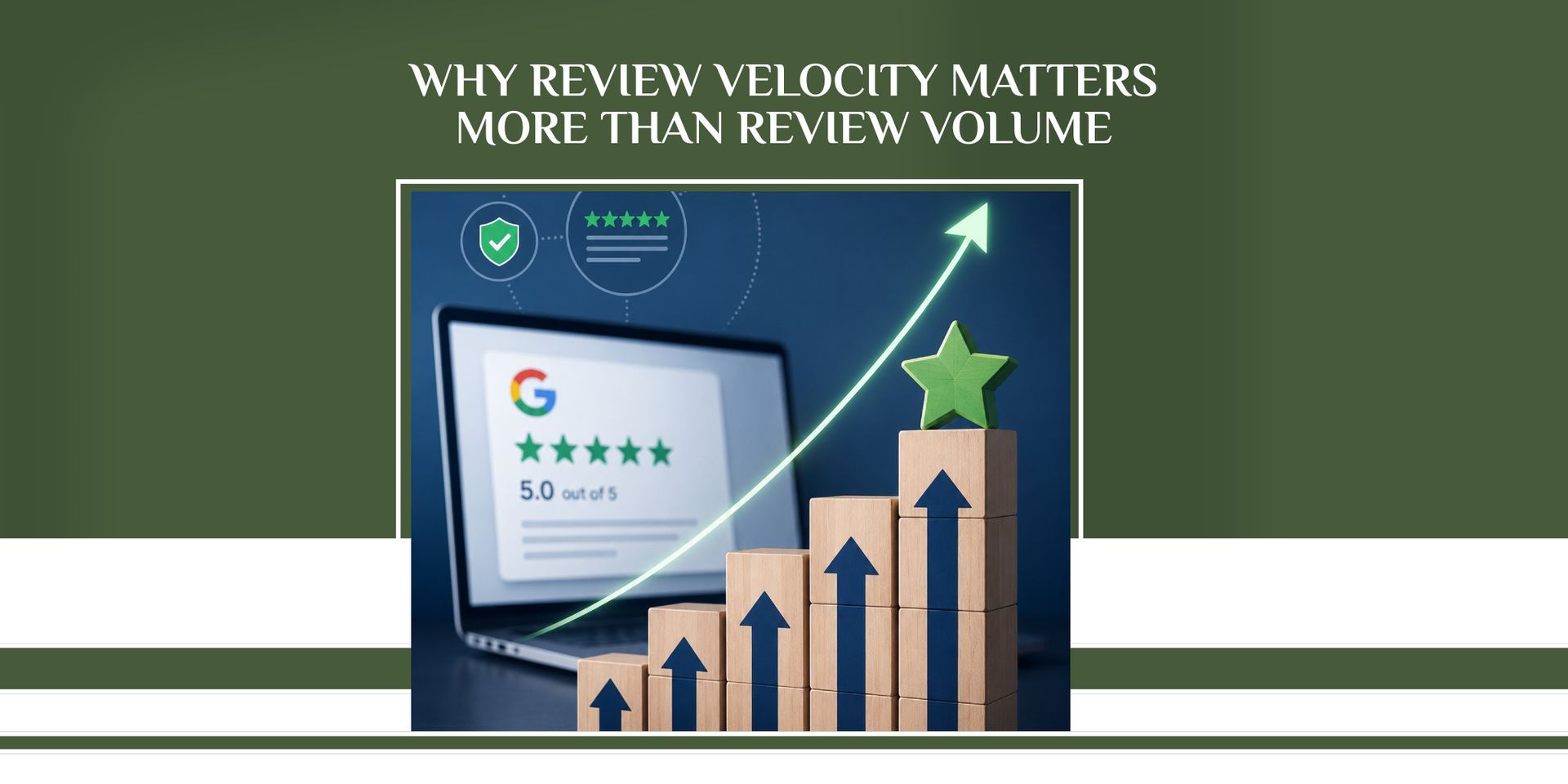
A business with 40 reviews collected steadily over the past twelve months looks active, consistent, and in demand.
Recency signals to both search engines and real customers that you are still doing good work right now.
This is one reason why a one-time push to collect reviews rarely delivers lasting results.
What works is a consistent process that generates new feedback as a natural extension of the customer journey.
When prospective customers see that your most recent review was posted last week, they feel more confident that what they are reading is still accurate and relevant.
How to Collect Genuine Customer Feedback Without It Feeling Forced
Many service business owners hesitate to ask for reviews because it feels awkward or transactional.
The good news is that getting reviews doesn't need to be a hassle when you build the process into the natural flow of your customer journey.
The key is to make feedback collection feel like a genuine check-in rather than a favour being asked.
Customers who have had a good experience are usually happy to share it. The barrier is rarely willingness.
It is usually timing, friction, or simply forgetting. Removing those barriers is what a good feedback collection process is designed to do.
The approach also needs to stay ethical. Google's guidelines are clear that businesses should not incentivise reviews or manipulate feedback.
A compliant, honest process asks customers to share their real experience and makes it easy to do so.
Nothing more and nothing less. This is exactly where an automated, structured approach outperforms ad hoc manual requests.
The best moments in the customer journey to ask for feedback
Timing is everything when it comes to feedback collection.
The most effective moments are when the customer's experience is fresh and their satisfaction is at its highest. For most service businesses, that is shortly after job completion.
A message sent within 24 to 48 hours of the service being delivered typically sees the highest response rate.
At this point, the customer remembers the experience clearly, the emotional value of a good job is still present, and the act of sharing feedback feels natural rather than pressured.
For businesses that offer follow-up calls or aftercare check-ins, that moment is also an excellent opportunity to guide a satisfied customer toward leaving a review.
Avoid asking for feedback too early, before the work is properly finished, and avoid leaving it so late that the experience has faded.
Getting the timing right is one of the simplest improvements a service business can make to its feedback collection rate.
How automation makes ethical feedback collection consistent
The biggest challenge with manual feedback collection is that it is inconsistent. A busy tradesperson finishes a job and moves straight to the next one.
A clinic receptionist forgets to send the follow-up message. The result is that only a fraction of satisfied customers ever leave a review, not because they would not have, but because no one asked them at the right moment.
Automated tools solve this by triggering feedback requests at the right point in the customer journey, every single time.
When a job is marked as complete, the system sends a personalised message that feels human rather than automated.
The customer gets a straightforward invitation to share their experience, and the business gets a steady flow of genuine feedback without anyone having to remember to chase it.
This consistency is what builds a strong review profile over time.
It is also what aligns with Google's guidelines, because the process is transparent, voluntary, and honest. No incentives, no filtering, and no manipulation.
Turning Feedback Into a Local Marketing Asset
Collecting feedback is only half the job. The real value comes from putting that feedback to work across the places where prospective customers are already looking.
When you treat social proof seriously, it becomes one of the most cost-effective marketing tools available to a local service business.
The phrase social proof sells is not marketing jargon.
It reflects the straightforward reality that people trust other people more than they trust business owners talking about themselves.
Sharing genuine customer feedback in the right places, at the right time, gives prospective customers the reassurance they need to take the next step.
The three most important places to deploy your feedback are your website, your Google Business Profile, and your social media channels.
Each serves a different audience at a different stage of the decision-making process, and using them together creates a consistent trust signal that is hard to ignore.
Using feedback on your website to increase enquiries
Your website is where interested customers go to make a final decision. If they arrive and cannot find strong evidence that other people have trusted you, many of them will leave without making contact.
Embedding reviews directly on your site addresses this gap and can meaningfully increase the number of enquiries you receive.
Review widgets, testimonial sections, and service-specific case studies all contribute to a more persuasive website.
A potential customer reading about your kitchen fitting service and seeing three detailed reviews from people who had the same job done is far more likely to enquire than someone reading a generic service description with no supporting evidence.
For more on this, the guide on getting your Google reviews working harder on your website covers the practical steps in detail.
Keep your testimonial content current.
A website showing reviews from several years ago does not build the same confidence as one showing recent, specific feedback from real customers.
Sharing customer feedback on social media to reach local audiences
Social media is a powerful channel for local businesses, not because of paid advertising, but because of organic reach within your community.
When you share real customer feedback on your social channels, local people who follow you or come across your posts see that others in their area have had a good experience with your business.
This kind of content is often more engaging than promotional posts because it feels real.
A short post sharing a genuine five-star review, mentioning the specific town or area where the job was done, resonates with local audiences in a way that a generic service announcement does not.
Understanding why social media sharing actually matters can help you approach this consistently rather than as an afterthought.
You do not need a large following for this to work. Local reach is more important than broad reach for service businesses, and regular, authentic feedback posts build exactly that.
How Feedback Strengthens Your Competitive Position Locally
In most local service markets, the difference between a business that wins consistently and one that struggles to grow is not the quality of the work.
It is the visibility of the proof. Understanding why your business reputation actually matters is the foundation of a long-term competitive strategy.
A service business with a strong, well-maintained feedback profile appears more frequently in local search results, looks more credible on Google Maps, and converts a higher percentage of enquiries into booked jobs.
This advantage compounds over time. The more reviews you collect, the stronger the signal, and the harder it becomes for a competitor to close the gap.
Online reputation management for local service businesses is not about vanity metrics.
It is about being the obvious choice when someone in your area searches for what you offer.
What happens when competitors have more reviews than you?
When a competitor has significantly more reviews than your business, the trust gap is visible to every prospective customer who compares you side by side.
If someone is choosing between two local removal companies and one has 180 reviews while the other has 12, the choice is rarely a difficult one, regardless of pricing.
This gap also affects local search rankings. Google's algorithm gives weight to review volume and recency when determining which businesses appear prominently in local results.
A competitor with a stronger review profile will often outrank you, which means fewer people even find you in the first place.
Closing that gap requires a consistent approach to feedback collection, not a one-off campaign.
Building a feedback advantage that is difficult to replicate
The businesses that win over time in local markets are the ones that treat feedback collection as an ongoing process rather than a periodic task.
When you collect new reviews consistently, month after month, you build a profile that a competitor who is not doing the same thing simply cannot close quickly.
Even if a competitor decides to start collecting reviews tomorrow, they cannot create twelve months of consistent, recent feedback overnight.
That historical pattern of steady, genuine reviews signals long-term reliability to both customers and search engines. It is one of the few competitive advantages in local marketing that genuinely compounds and is difficult to replicate at speed.
Real Examples of UK Service Businesses Growing Through Customer Feedback
The impact of a structured feedback strategy is not theoretical.
UK service businesses across a range of sectors are seeing measurable results from treating customer feedback as a core part of how they operate.
For real results from businesses like yours, the examples from the Customer Feedback Centre portfolio demonstrate what is genuinely achievable.
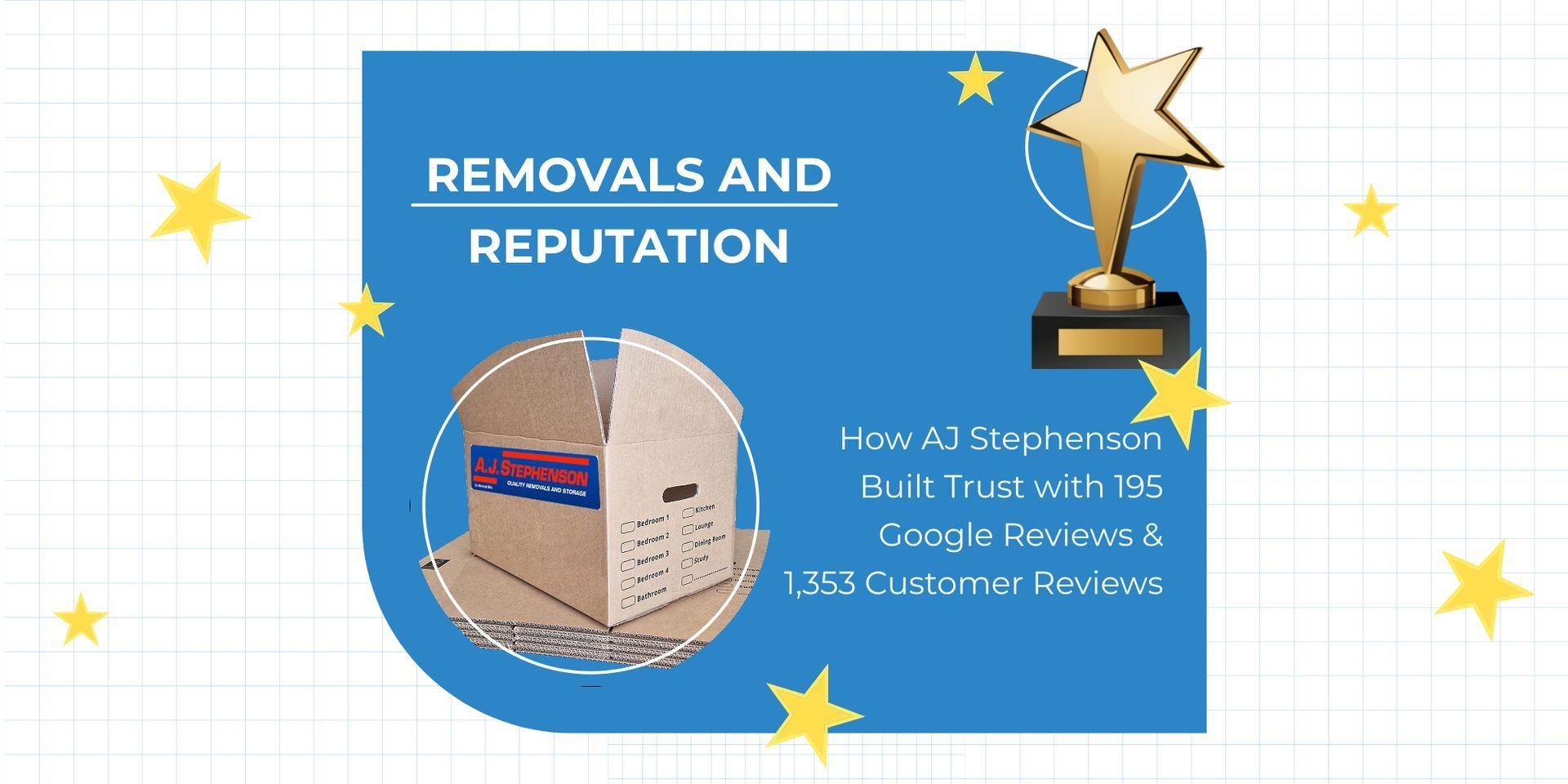
One standout example is AJ Stephenson Removals.
The business understood that the removals sector is one where trust is everything. Customers are handing over responsibility for their most valued possessions, often during one of the most stressful periods of their lives.
Generic marketing messages do not cut through in that context. Real, detailed reviews from real customers do.
By working with Customer Feedback Centre, AJ Stephenson built a Google review profile with over 195 genuine reviews.
The story of how AJ Stephenson built trust with 195 Google reviews shows how a consistent, ethical approach to feedback collection translated directly into greater local visibility and customer confidence.
It is a useful read for any UK service business owner who is wondering whether a structured approach is worth the investment.
Is a Managed Feedback System Right for Your Service Business?
A managed feedback system works best for service businesses that deliver repeat work, operate in a competitive local market, and want a consistent way to build their reputation without adding to their workload.
If you are a tradesperson, a clinic, a removal company, or any other service-led business that relies on local trust to win work, the answer is almost certainly yes.
The top businesses that benefit most from Google reviews share a few common characteristics.
They operate in sectors where trust is the primary purchase driver. They serve local customers who read reviews before making contact.
And they want a repeatable process that does not depend on remembering to ask every single customer manually.
If that sounds familiar, a structured approach to feedback collection is likely to deliver a meaningful return.
The Customer Feedback Centre offers an automated, ethical solution built specifically for UK service businesses.
It handles the timing, the messaging, and the consistency, so you can focus on the work itself while your reputation builds in the background.
To see whether it is the right fit for your business, you can start your risk-free trial and experience the difference that consistent, genuine feedback collection can make to your local presence.
Frequently Asked Questions
How does customer feedback help attract more local customers in the UK?
Customer feedback helps attract more local customers by building visible trust at the exact moment someone is deciding which business to contact. When a prospective customer searches for a local service and sees a business with recent, detailed, positive reviews, they feel confident enough to make an enquiry. Google also factors review volume and quality into local search rankings, meaning businesses with stronger feedback profiles appear more prominently in local results, reaching more potential customers before a competitor does.
What is the difference between collecting feedback and managing your online reputation?
Collecting feedback is the process of asking customers to share their experience after a service has been delivered. Managing your online reputation is the broader, ongoing practice of making sure that feedback is visible, current, and working in your favour across the right platforms. Reputation management includes responding to reviews, sharing feedback on social channels, embedding it on your website, and maintaining a consistent presence that prospective customers can find and trust. One feeds the other, but they are not the same thing.
How many reviews does a UK service business need to appear trustworthy to new customers?
There is no single number, but research consistently suggests that most UK consumers want to see at least 10 to 20 recent reviews before they feel confident trusting a local service business. In competitive sectors such as trades, removals, and healthcare, businesses with 50 or more detailed reviews tend to perform significantly better than those with fewer. What matters most is a combination of volume, recency, and the quality of the review content. A handful of glowing reviews from two years ago is far less persuasive than 30 honest, detailed reviews from the past six months.
Can automated feedback collection still feel genuine and personal to customers?
Yes, when done well, automated feedback collection feels natural rather than robotic. The key is personalisation. Messages that reference the specific service completed, use the customer's name, and are sent at the right point in the journey feel like a thoughtful follow-up, not a bulk email. Ethical automation does not filter reviews or push customers toward positive responses. It simply makes it easy for satisfied customers to share their experience at a moment when they are most likely to do so. The result is genuine feedback that reflects the real quality of the service.
How quickly can a service business see results after improving its feedback strategy?
Most service businesses start to see early results within four to eight weeks of adopting a consistent feedback collection process. New reviews begin appearing regularly, the review profile looks more active and current, and conversion rates on the Google Business Profile often improve as the volume grows. More significant improvements to local search visibility typically develop over three to six months as the review profile builds genuine depth. The compounding nature of consistent feedback collection means results tend to accelerate the longer the process is maintained.
Does customer feedback influence local search rankings on Google?
Yes. Google's local search algorithm takes into account the number of reviews a business has, how recent they are, the overall rating, and how the business responds to them. A business with a steady flow of new, genuine reviews will generally outrank a comparable business with a stale or sparse review profile in local search results and on Google Maps. This makes customer feedback for local businesses in the UK a direct input into search visibility, not just a trust signal for human readers.
What should a UK service business do if it has very few reviews to start with?
The most important step is to start a consistent feedback collection process immediately. Begin with recent customers who had a good experience and make it as easy as possible for them to leave a review by sending a direct link to your Google review page. Avoid asking multiple people at once, as a sudden spike of reviews can look unnatural. Instead, build steadily over time. While the profile is growing, focus on making the most of the reviews you do have by featuring them prominently on your website and responding thoughtfully to each one. A small number of detailed, genuine reviews is a strong starting point, and volume will follow with consistency.
Discover what the Customer Feedback Centre could do for your business.
No contract required. Cancel anytime. Setup in as little as 24 hours.
Prefer to ask a question first? Use the contact form on our Contact page and we'll get back to you promptly.
Recent Posts