


The Review That Nearly Became a Reputation Crisis
A Story About Missed Appointments, Missed Opportunities, and the Hidden Power of Customer Feedback

In local service businesses, reputation is rarely damaged by one major disaster.
More often, it’s damaged quietly:
- A missed call.
- A forgotten appointment.
- A customer left waiting without an update.
And in today’s world, those moments don’t stay private for very long.
Recently, during a review session with one of our clients - a well-established home improvement company - we uncovered a situation that perfectly demonstrated how quickly a small operational issue can turn into a public reputation problem.
The interesting part?
The negative review itself wasn’t the real issue.
The real issue was what happened before the review was ever posted.
Scene One: The Customer Who Was Already Frustrated
The company had been using a customer feedback platform to collect reviews and monitor customer sentiment.
Everything appeared to be going well on the surface.
- Positive reviews were coming in.
- Customers were generally happy.
- The business had built a strong local reputation over many years.
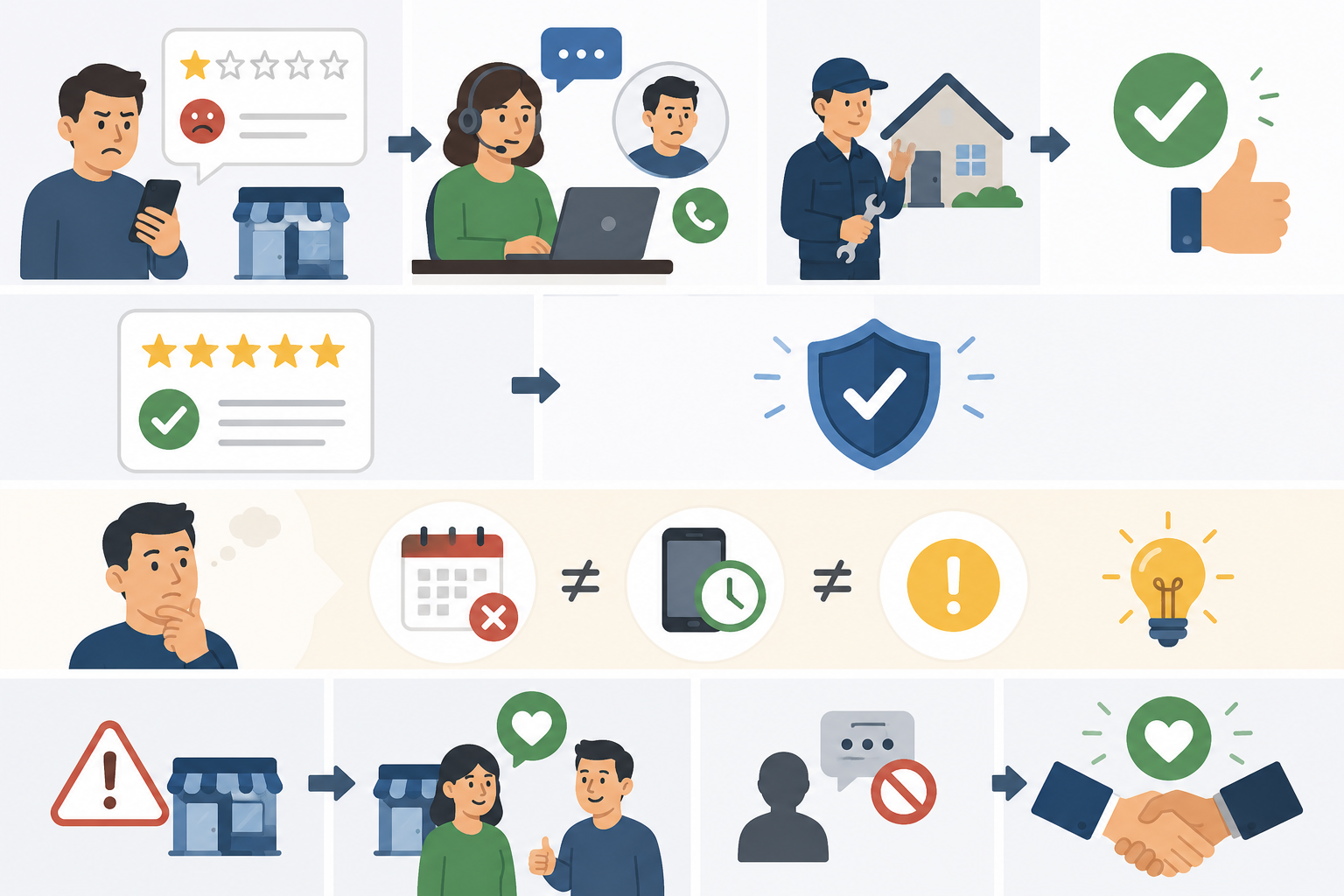
Then one customer used the company’s website feedback form to leave negative feedback.
The reason was simple:
- A pre-arranged appointment had been missed.
- No update.
- No communication.
- No explanation.
At this stage, the situation was still recoverable.
The customer had not yet gone public.
They had effectively raised their hand privately and said:
“I’m unhappy.”
That moment was critical.

Because private negative feedback is often the final opportunity a business gets before frustration becomes public criticism.
Scene Two: The Warning Signs Were Missed
The feedback notification was received by email.
But nobody acted quickly enough.
The customer heard nothing back.
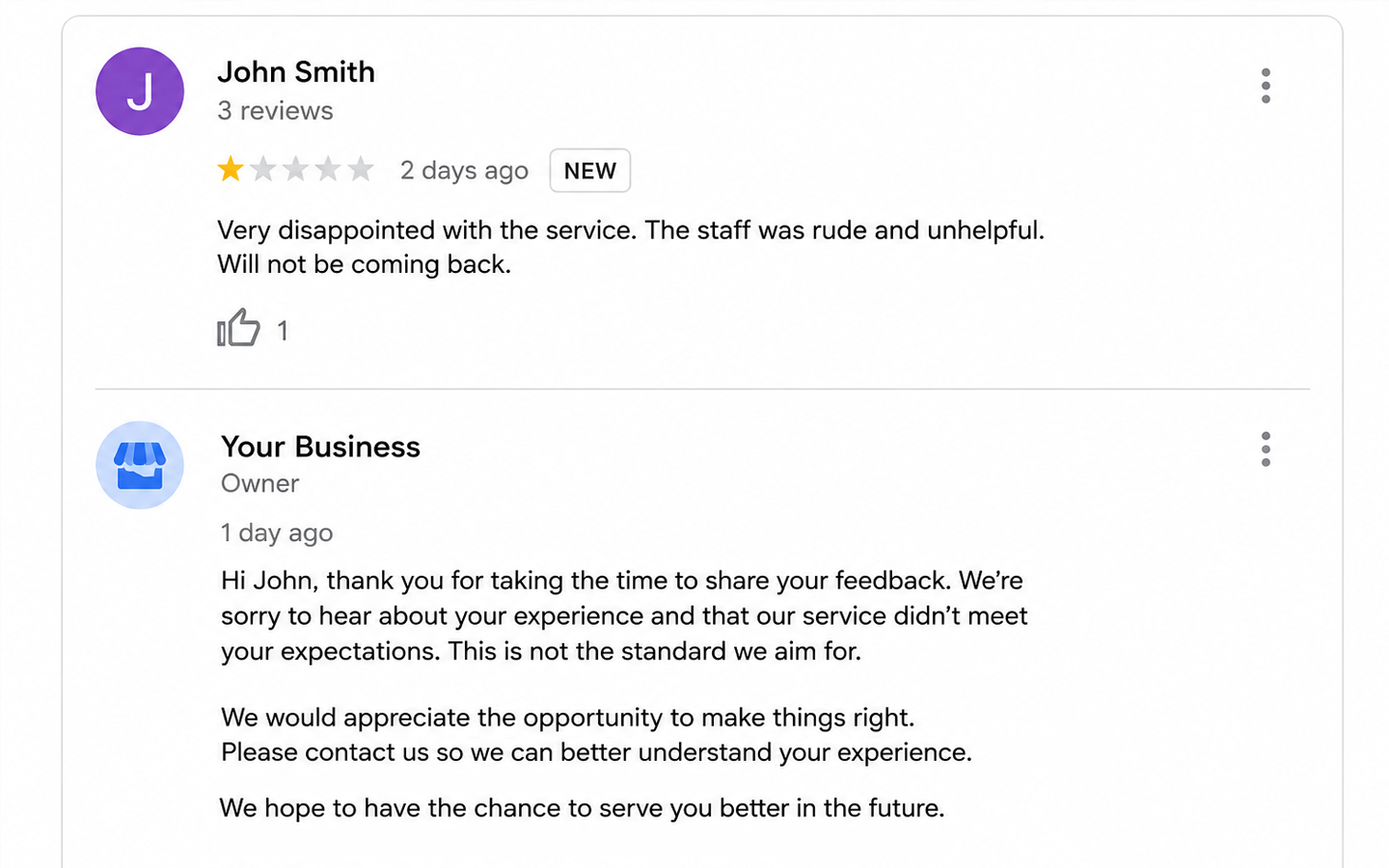
As the frustration built, the customer eventually left a one-star public review on Google.
Suddenly, what had been an internal operational issue became visible to every future customer researching the business online.
This is the part many businesses underestimate.
Negative reviews are rarely created instantly.
Most happen after the customer feels ignored.
And in many cases, customers actually give businesses a chance to recover first.
Scene Three: The Recovery
Fortunately, the business eventually reached out to the customer. A conversation took place. The work was completed.
The issue was resolved professionally.
As a result, the customer removed the negative Google review entirely.
Crisis avoided.
But during the review session, something important became clear:
- The problem wasn’t really the missed appointment.
- The problem was the delay in responding to the frustration.
- That distinction matters enormously.

Because mistakes happen in every business.
Customers are often surprisingly understanding when businesses communicate properly.
What damages trust is silence.
The Bigger Lesson Most Businesses Miss
During the session, we discussed something that completely changed the business owner’s perspective.
Initially, there had been a belief that responding to customer feedback wasn’t particularly important.
After all, many service businesses assume: “We probably won’t work with that customer again anyway.”
But that thinking overlooks how modern buying decisions work.
Potential customers are constantly watching.
- They read reviews.
- They read responses.
- They observe how businesses behave when things go wrong.
In many cases, a thoughtful response to criticism builds more trust than ten generic five-star reviews.
Why? Because it demonstrates accountability.
It shows future customers that if something ever does go wrong, the business will handle it professionally.
The Shift From “Collecting Reviews” to Managing Reputation
One of the biggest breakthroughs during the review session was the realisation that customer feedback is not just about collecting stars.
It’s about operational intelligence.
The business discovered that several recurring themes appeared across feedback:
- Customers consistently praised professionalism and quality of work
- Communication and punctuality were recurring strengths
- But missed appointments and delayed updates appeared multiple times as a weakness
This was incredibly valuable.
Because reviews stopped being “marketing content” and became business insight.
The feedback highlighted exactly where operational improvements could strengthen both customer satisfaction and future conversions.

The Hidden Opportunity Inside Negative Feedback
Most businesses fear negative feedback.
But the truth is: Negative feedback handled correctly can become one of the most valuable assets a company has.
Why?
Because it creates opportunities to:
- Recover unhappy customers
- Improve internal processes
- Build trust publicly
- Prevent repeat issues
- Increase future referrals
The companies with the strongest reputations are not the companies that never make mistakes.
They are the companies that respond quickly, professionally, and consistently when problems arise.
Practical Advice for Businesses
If you run a local service business, there are several important lessons to take away from this story.
1. Treat Negative Feedback as Urgent
If a customer leaves unhappy feedback privately, act immediately.
Ideally:
- Call the customer quickly
- Acknowledge the frustration
- Explain the situation honestly
- Focus on resolving the issue
Speed matters enormously.
The longer frustration sits unresolved, the higher the risk of public escalation.
2. Ask Every Customer for Feedback
Many businesses selectively ask only happy customers for reviews.
That approach creates blind spots.
Asking every customer for feedback:
- Gives a more accurate picture of the business
- Identifies recurring operational problems
- Creates opportunities to resolve issues early
- Builds greater credibility over time
Ironically, businesses willing to hear criticism often end up building stronger reputations.
3. Respond to Reviews Publicly
Review responses are no longer optional.
Potential customers actively read them.
A thoughtful response shows:
- professionalism,
- care,
- accountability,
- and confidence.
Even simple responses can dramatically improve trust and conversion rates.
4. Use Feedback as Business Intelligence
Customer feedback should not sit ignored inside a dashboard.
Look for patterns.
If the same issue appears multiple times, there is usually an operational improvement waiting to happen.
Sometimes one small adjustment can remove friction across the entire customer journey.
5. Reputation Is a Revenue Asset
Most businesses still think reviews are just “marketing.”
They’re not.
Reviews influence:
- trust,
- shortlisting,
- conversion rates,
- referrals,
- and pricing confidence.
Long before a customer contacts you, they are already deciding whether you feel safe, reliable, and professional.
Your reputation often makes that decision for them.

Final Thoughts
This particular situation ended positively.
- The customer was recovered.
- The review was removed.
- The business learned valuable lessons.
But the story highlights something every business owner should understand: In today’s market, reputation management is no longer reactive.
It’s operational.
The businesses that thrive over the next few years will not necessarily be the loudest marketers.
They will be the companies that:
- communicate consistently,
- respond quickly,
- learn from feedback,
- and build trust publicly over time.
Because ultimately, customers are not simply buying a service.
They are buying certainty.
I hope the above article was of interest and you found it useful.
If you need our help, then please arrange a call with me.